THE SHOT YOU WON'T PLAY.
THE BALL YOU WON'T BOWL.
THIS WORK CLOSES
THAT GAP.
You've done the visualisation. You've tried the breathing exercises. You've heard 'back yourself' more times than you can count. None of it held when the ball was in the air and the game was on the line. That's not a you problem. Those tools were never built for cricket.
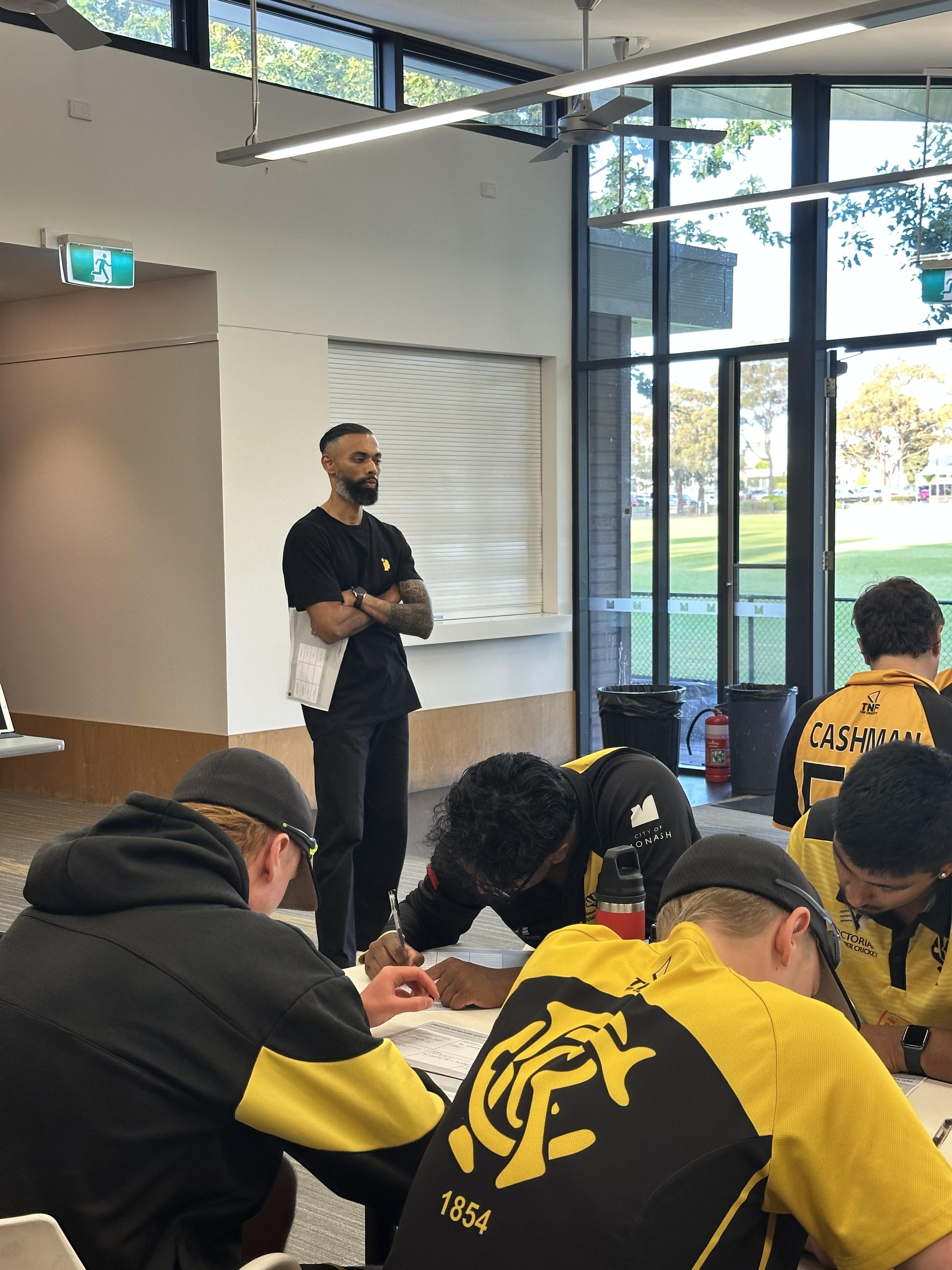
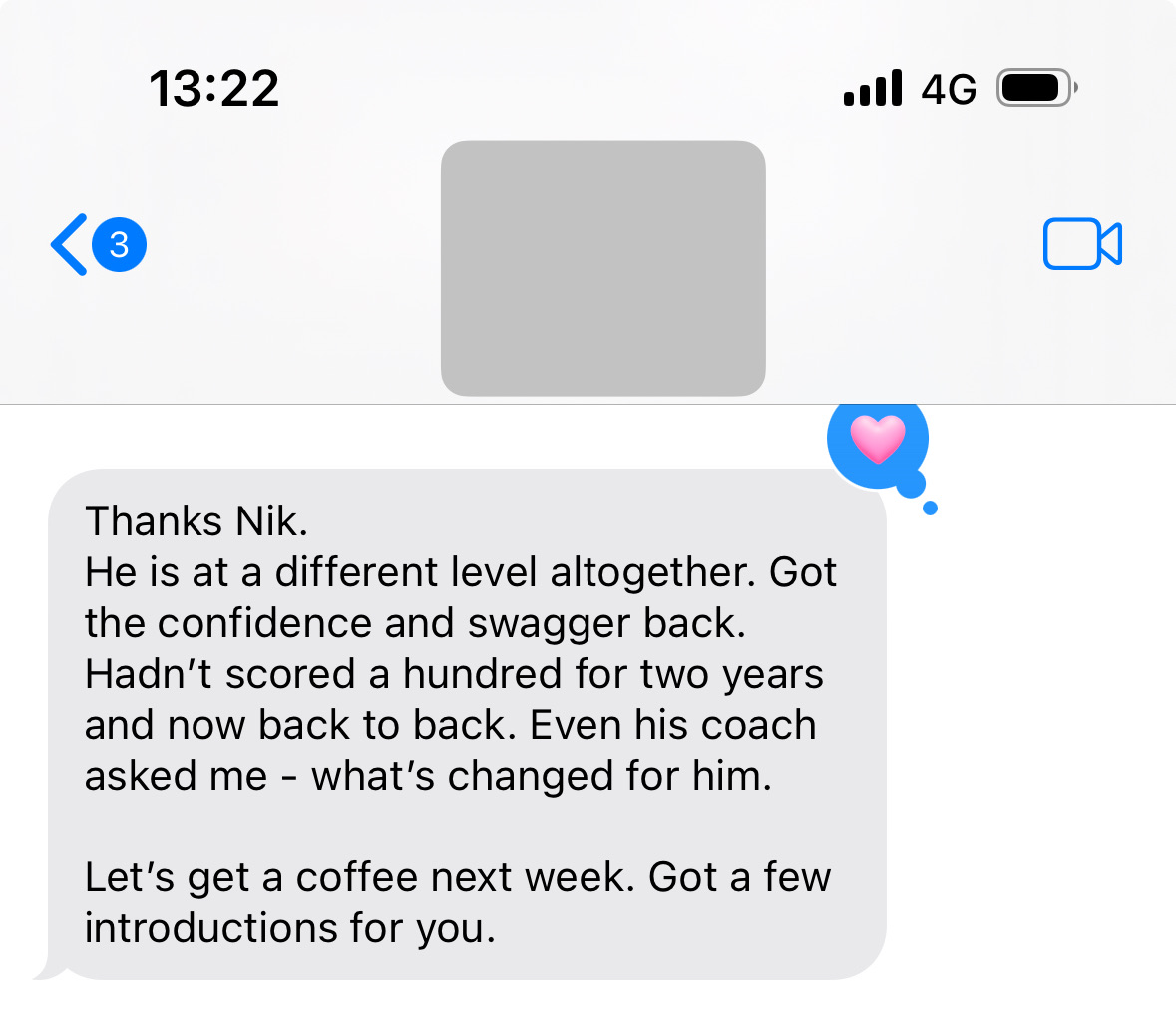
After doing the course. She looked like herself again at the crease. The fear was gone. Not suppressed. Scored two consecutive centuries against adult opposition in Premier Cricket.
YOU ALREADY KNOW
HOW TO PLAY.
SO WHY AREN'T YOU?
The skill is there. You know it's there. But every time pressure hits - at the crease or at the top of your mark - you stop playing your trusted game. That switch happens before the delivery. And once it happens, everything after is damage control. This is the only work that bridges that gap.
Visualisation
Works in the changeroom before you strap the pads on. Useless three balls into your innings when you've nicked one behind. Useless at the top of your mark when you've just been carted for six and the batter is eyeing it again. Visualisation is already long gone.
Breathing exercises
Cricket hands you 30 seconds between every delivery to sit inside your own mind. Breathing settles the body. It does nothing to the thought that starts the moment an over goes for 14. Or you've nicked one behind. Or you've just been pulled for six off a short ball you shouldn't have bowled. The body might be calm, but the next decision is already compromised.
"Back yourself" / "Control the controllables"
You're 34 off 60 in a crunch game. The spinner is bowling outside off. Two slips in. Or you're into your sixth over and the batter is timing everything. Field set. Captain watching. The game is on. Tell me exactly what "back yourself" means to do right now. Nobody knows. That's the problem.
Generic sports psychology
Frameworks built for footballers, swimmers, sprinters - athletes in constant motion with immediate feedback. Cricket is 80% standing still and waiting. The mental demands have nothing in common. Self talk, manifestation and visualisation have the same problem - they work when there's no consequence. They fall apart the moment there is one.
Not fitness. Not technique.
A mental problem. This solves it once and for all.
5 CONCEPTS.
ONE SYSTEM.
BUILT FOR CRICKET.
Every framework is designed for what actually happens between deliveries, mid-innings and mid-spell. Not borrowed from a boardroom or a different sport.
The Hose
Pressure Signature™Every player has a pressure pattern. We map yours precisely - so you can read it coming before it costs you runs at the crease or wickets at the top of your mark.
The Static Channel
7-Minute Flow Method™The difference between middling your first ball and scratching around for 12 off 35 is often what happened in the seven minutes before you crossed the rope. This builds that window into a repeatable process - so you walk out ready, not hoping to find it.
The Iceberg
Pressure Release Framework™The full delivery you don't drive. The slower ball you hold back on. These aren't technical errors. They're fear playing out in your shot selection and bowling plans. We name them and pull them apart.
The Light Switch
Trigger Tracker™A nick behind. A full toss carted for six. Every one carries weight into the ball that follows. The Trigger Tracker gives you a personal reset in the dead ball window - so the next delivery has nothing to do with the last one.
The Mirror Engine
Pro Performance System™Brings weeks one through four into one repeatable performance system - 24 hours before the game, during it and after. So the next time you walk out in a final, your mind is already there.
The 24-Ball System™
Runs & WicketsEverything converts directly to runs and wickets. Net sessions structured to mirror the exact mental demands of a real game. The gap between training and game day closes here.
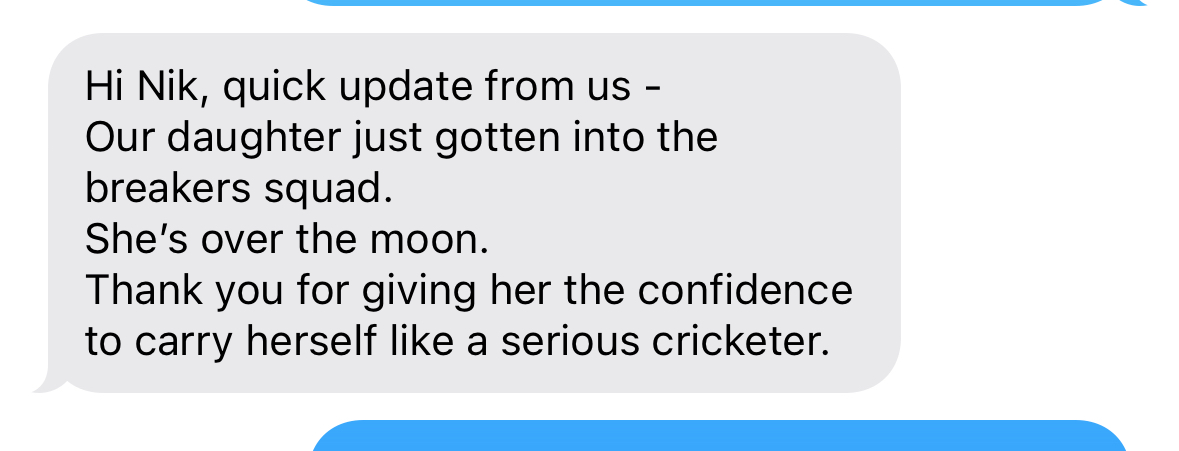
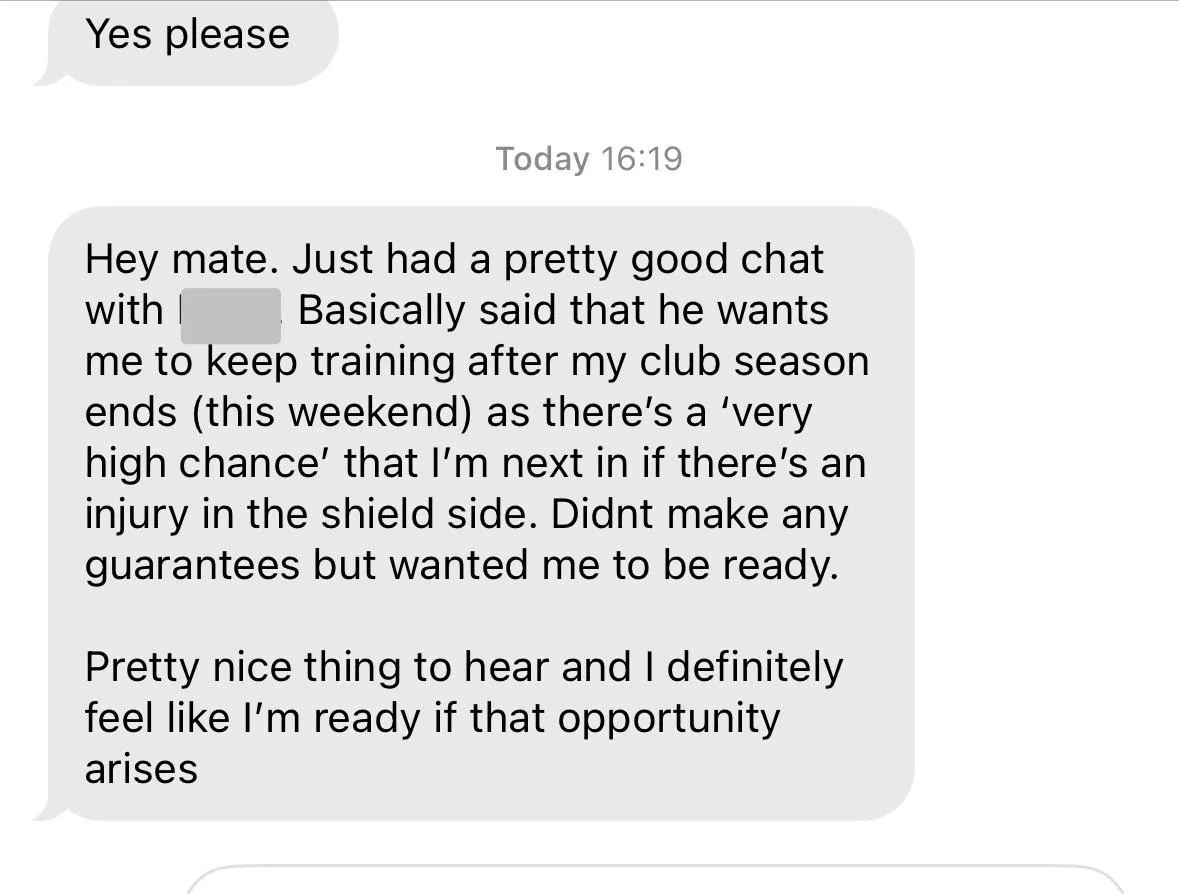
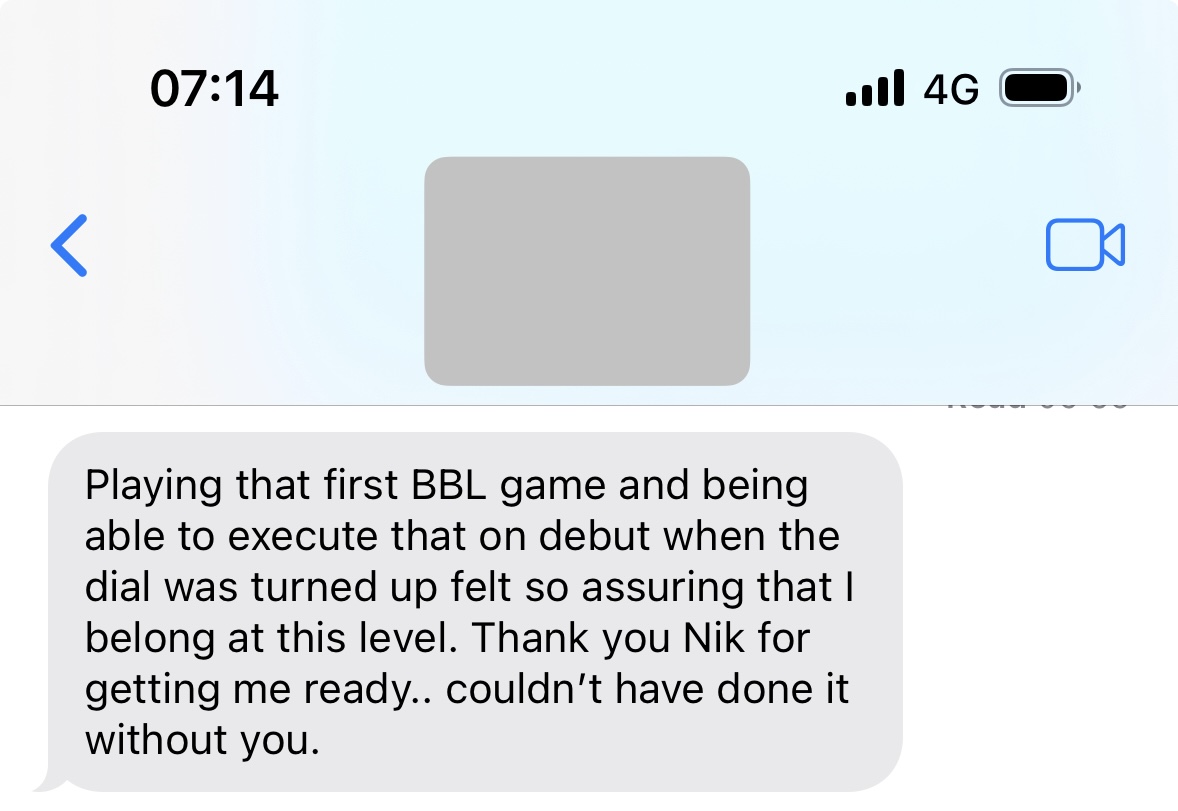
THE FRAMEWORKS WORK
WHEN YOU WORK THEM.
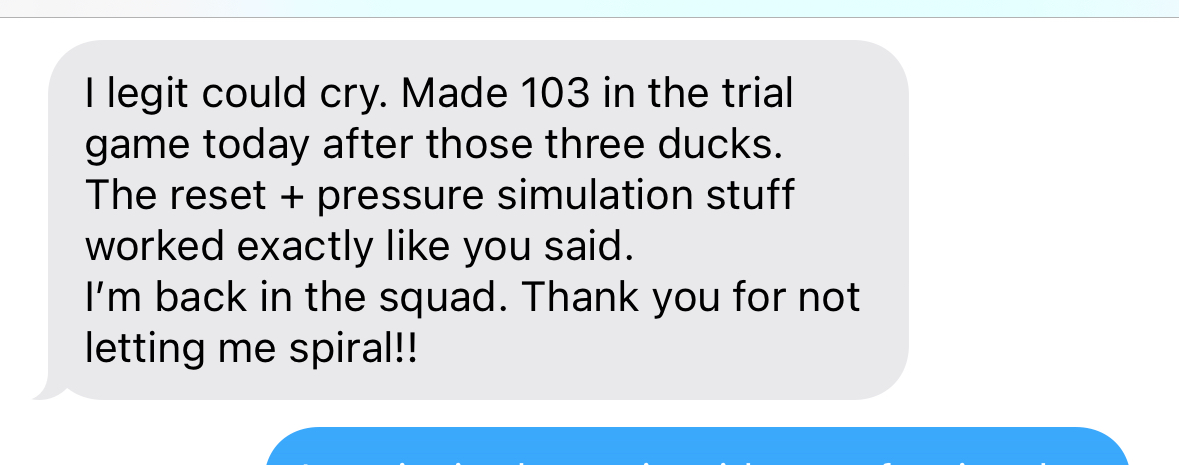
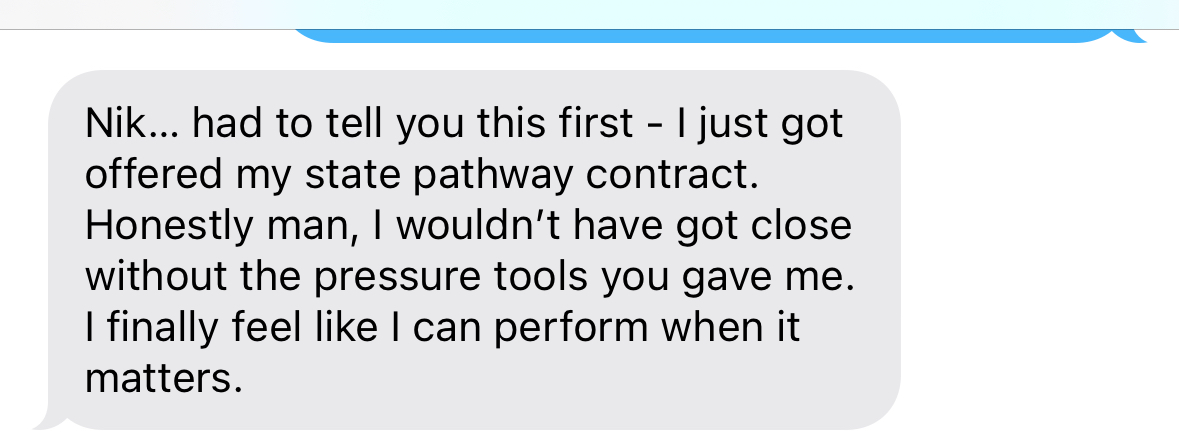
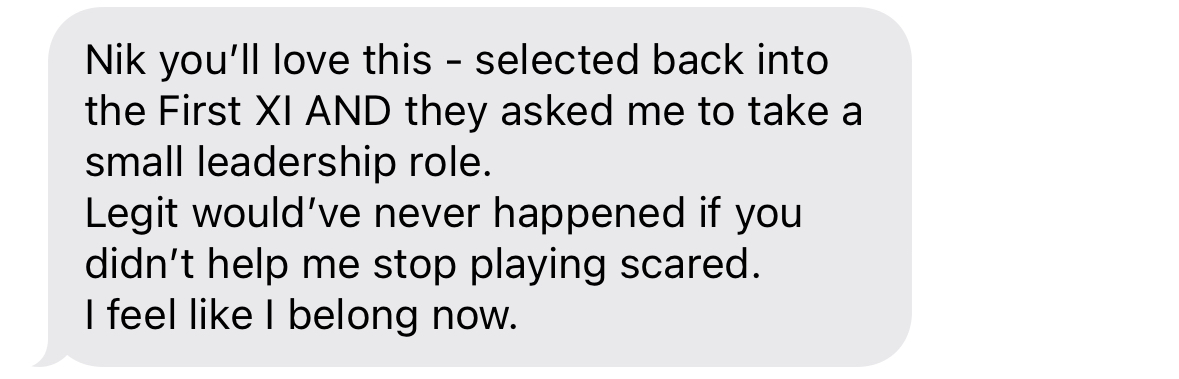
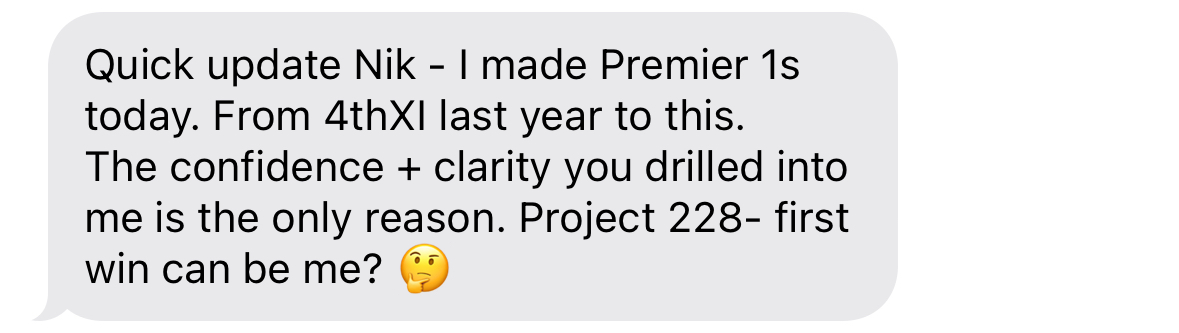
The 7-Minute Flow Method changed how i prepare. I used to just pad up and hope. Now I have a process.
I was dropped from the squad. Went through the full course. Came back with different wiring. The way I process a bad ball, a bad session, a bad month is so different.
The Trigger Tracker is something I use every single game - it is not optional anymore.
I had a half-second switch-off between deliveries that I did not even know about. We found it in week one of the course. By week four it was gone.
START WHERE YOU ARE.
One is for your next match. One is for the rest of your career. Both start today.
For finding focus and flow between innings, after a drinks break, or any break in play when your mind needs to reset.
- Complete 7-Minute Flow Method™ - video session + worksheet
- Your personal posture, breath and eye reset sequence
- Your personal cue phrase - the trigger that locks focus in
- Access flow on demand - not feel, not luck, a trained repeatable process
- Lifetime access - one-time payment
One-time · No subscription · Price in USD
All five frameworks. The complete mental performance system used by my pro cricketers. Self-paced. Immediate access.
- All 5 modules - Pressure, Flow, Fear, Triggers, System
- Every framework - Pressure Signature™, 7-Min Flow™, Pressure Release™, Trigger Tracker™, Pro Performance System™
- 6 downloadable worksheets - built to use in training and games this week
- 24-Ball Training System™ - net sessions that replicate real game pressure
- Know exactly what is happening in your mind under pressure - and what to do about it
- Lifetime access - self-paced - start today
One-time · Lifetime access · Price in USD
Start with the $27 and upgrade anytime. The $27 is credited in full towards the complete course.
YOU ALREADY KNOW
THIS IS FOR YOU IF...
- → You perform better in training than in games. Every single time.
- → You get to 25 and your start thinking about your 100. You know it happens and cannot stop it.
- → You are scrolling this at 10pm replaying something that happened weeks ago. But is playing on loop.
- → One bad ball follows you into the next three overs. One bad game follows you into the next week.
- → You are disciplined enough to implement what you learn. You just need the right thing to implement.
- → You want something built for cricket specifically - not borrowed from a sport where you never stop moving
- → You've tried breathing, visualisation, manifestation, self talk, "back yourself" - none of it holds when there's real consequence on the next ball
Unlock the Mind
I DON'T SELL
MOTIVATION.
I BUILD FRAMEWORKS.
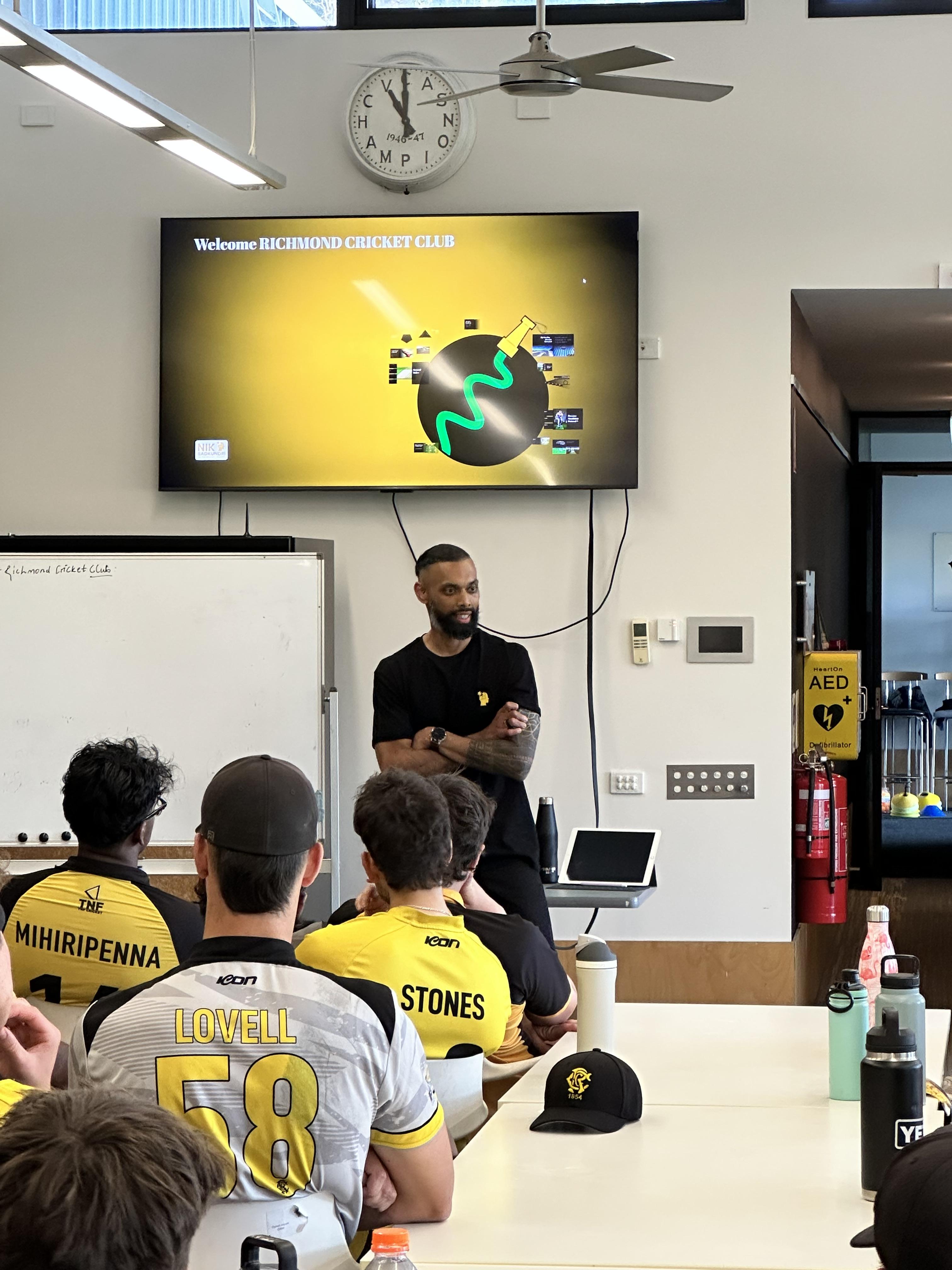
I work with cricketers who are good enough. Who have always been good enough. And who cannot figure out why that stops mattering the moment it counts.
My background is in performance psychology and identity-based coaching. I've worked with Pro, Semi-Pro, Rookie, Premier and pathway players through trials, selection pressure, injury, and the hard yards of pushing into higher representative cricket.
Players inside Project 228™ have trained this mental framework for 7+ years. Many are now playing state, franchise and international cricket. They use the same framework built inside Project 228™.
Most mental skills work in cricket is borrowed from other sports and repackaged. It sounds right. It doesn't hold when a spinner is bowling into footmarks in the 35th over and you need to score.
So I built cricket-specific frameworks from scratch. The Pressure Signature™ maps how your mind behaves specifically at the crease or at the top of your mark - not in a generic performance context. The Trigger Tracker™ is built around the dead ball window between deliveries that exists in no other sport.
The player who builds a structured mental game has a discernible edge over the player who just works hard. There is a difference. And that difference decides your career. That's where I work.
THE GAP BETWEEN
TRAINING YOU AND
GAME DAY YOU
ENDS HERE.
Start with the 7-Minute Flow Method™ or get the complete Game Ready Online Course™. One-time. Lifetime access.
GET INSTANT ACCESS.
This is where it changes. Pick your entry point below and get started today.